PMI
01
Philip Morris International
2023
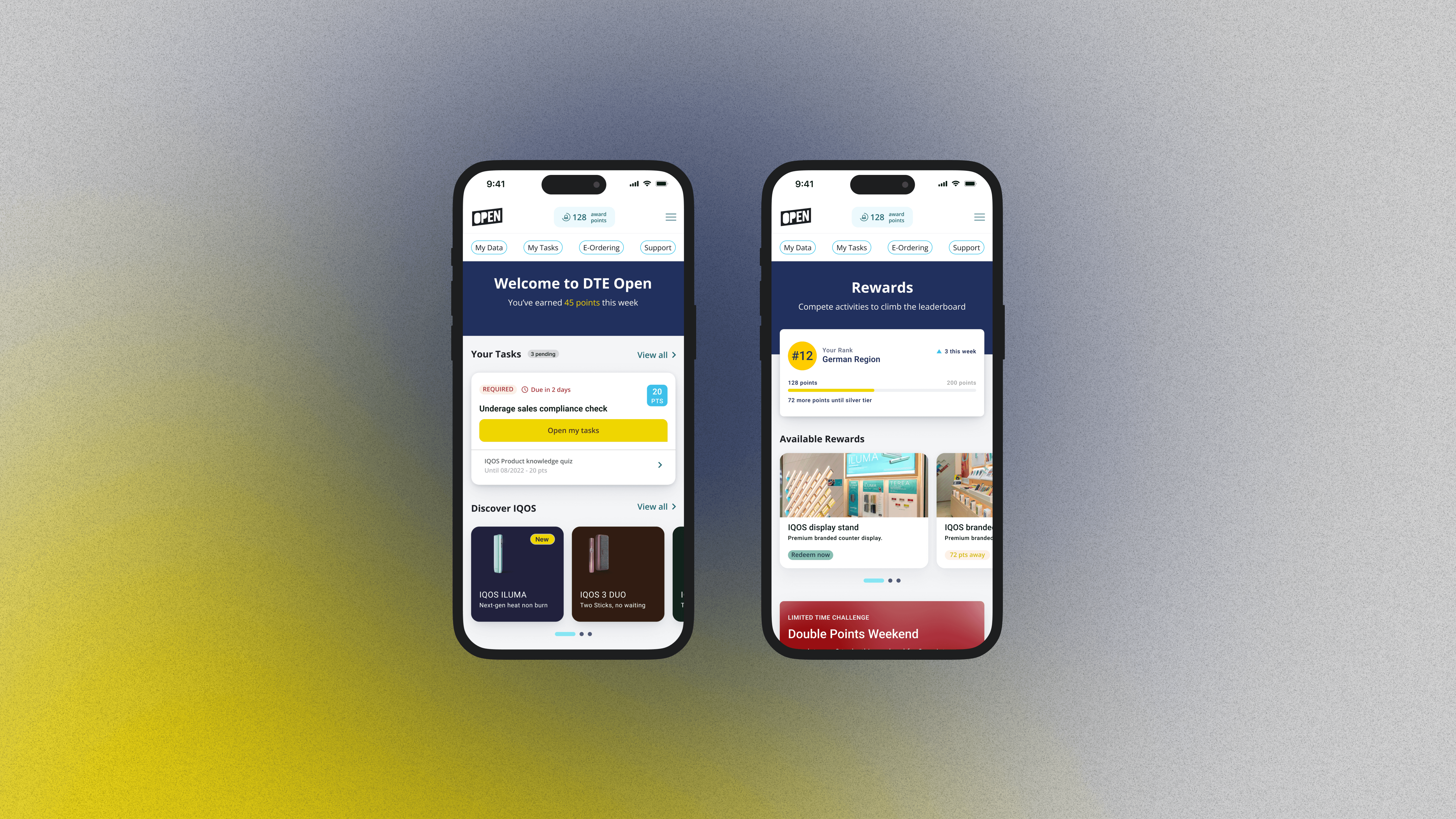
Unifying a fragmented retailer engagement platform across European markets, replacing local customisation with governed, scalable architecture.
Client:
Philip Morris International
Date:
2023
Role:
01. The Problem
Each European market had built its own version of PMI's retailer platform independently. Navigation structures diverged, components were rebuilt locally, and custom CSS overrides became standard practice.
What started as flexibility became fragmentation. Content couldn't be reused across markets. Campaigns required manual adaptation for each region. And engagement was declining. Nearly half of registered retailers were inactive.
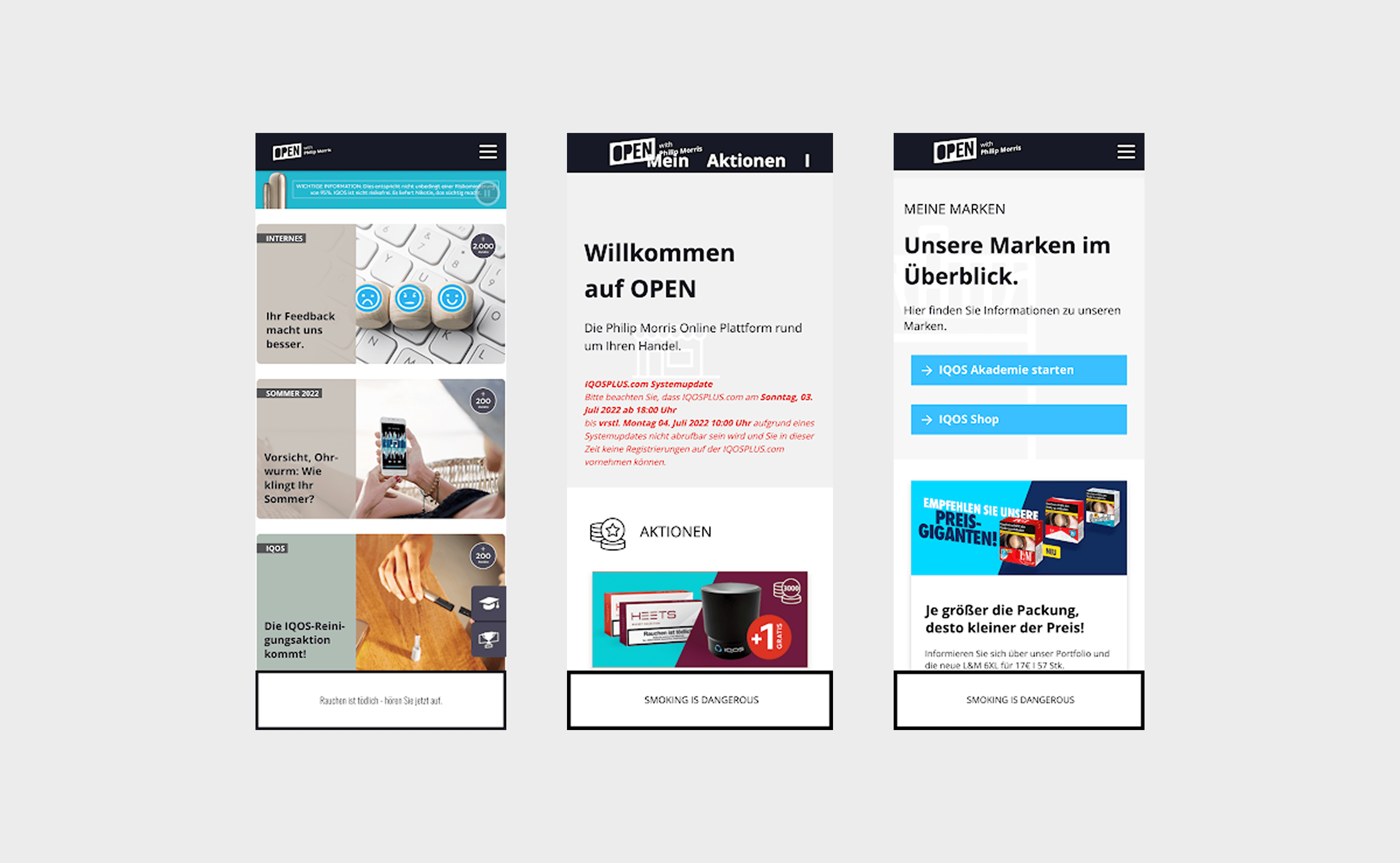
Three screens from the same platform. Three completely different experiences. Each market had customised independently until no two versions looked or worked the same.
02. The Insight
I ran interviews across five EU markets and headquarters, reviewed engagement analytics, and facilitated workshops with market leads and global stakeholders.
The problem wasn't missing features. It was the absence of shared architecture. Markets optimising locally had created a system that couldn't scale. Content couldn't travel between regions. Performance gains in one market couldn't be replicated in another. And internal politics were driving navigation decisions that should have been shaped by user behaviour.
I mapped retailer task flows and engagement data to restructure the information architecture around actual usage patterns, and used compliance requirements to enforce clear separation between product categories.
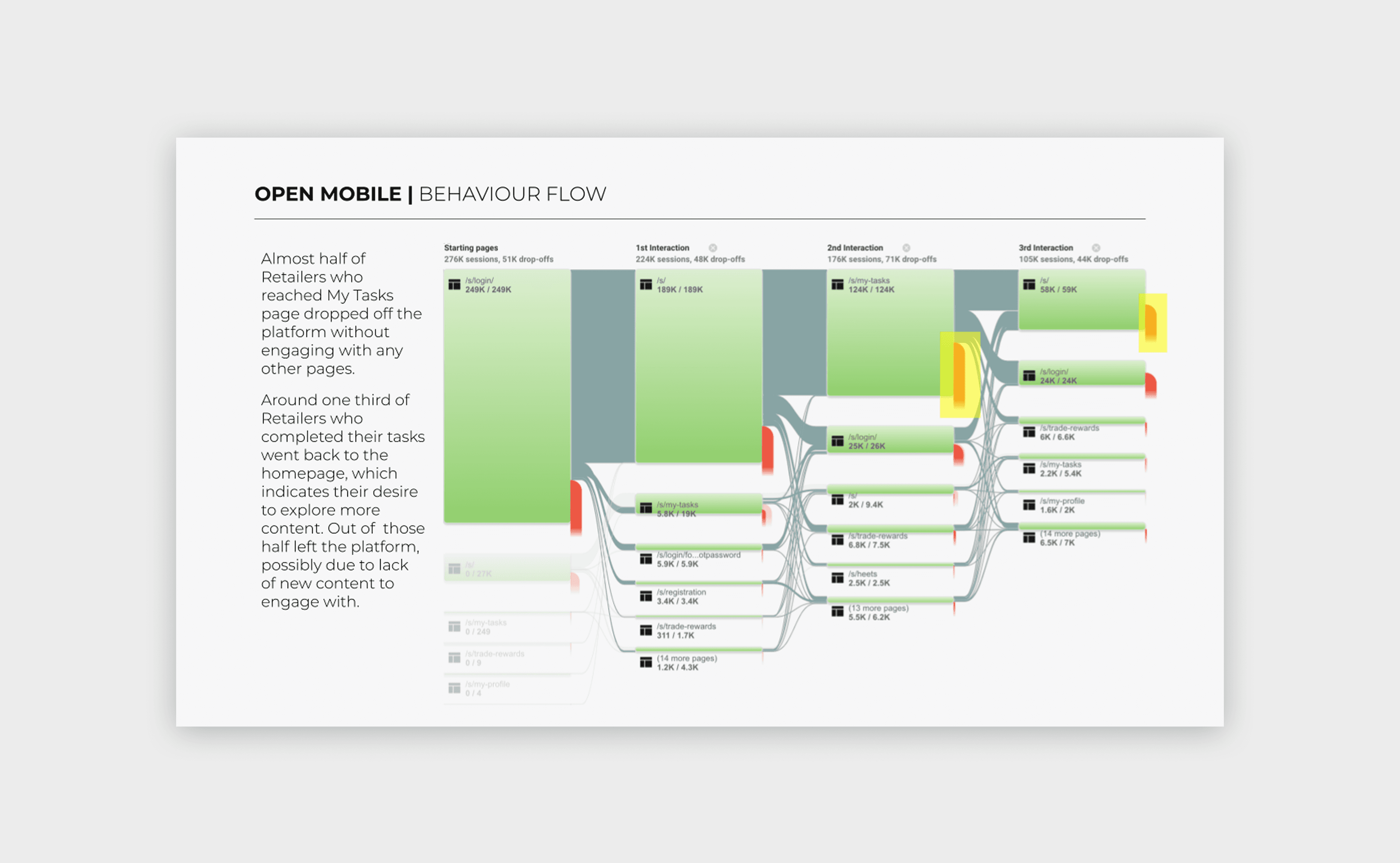
Almost half of retailers dropped off after completing a task. A third went back to the homepage looking for more. The platform gave them nothing to find.
03. The Approach
There was pressure to ship a quick EU rollout with minimal structural change. I advocated for a different approach: design the system once, deploy it correctly.
This required three things. A governed information architecture with shared navigation, standardised templates, and compliance-driven content separation across all markets. A mobile-first design system where markets assembled within defined rules rather than building independently. And a governance model with clear constraints on what could be configured locally versus controlled globally, preventing the fragmentation from returning.
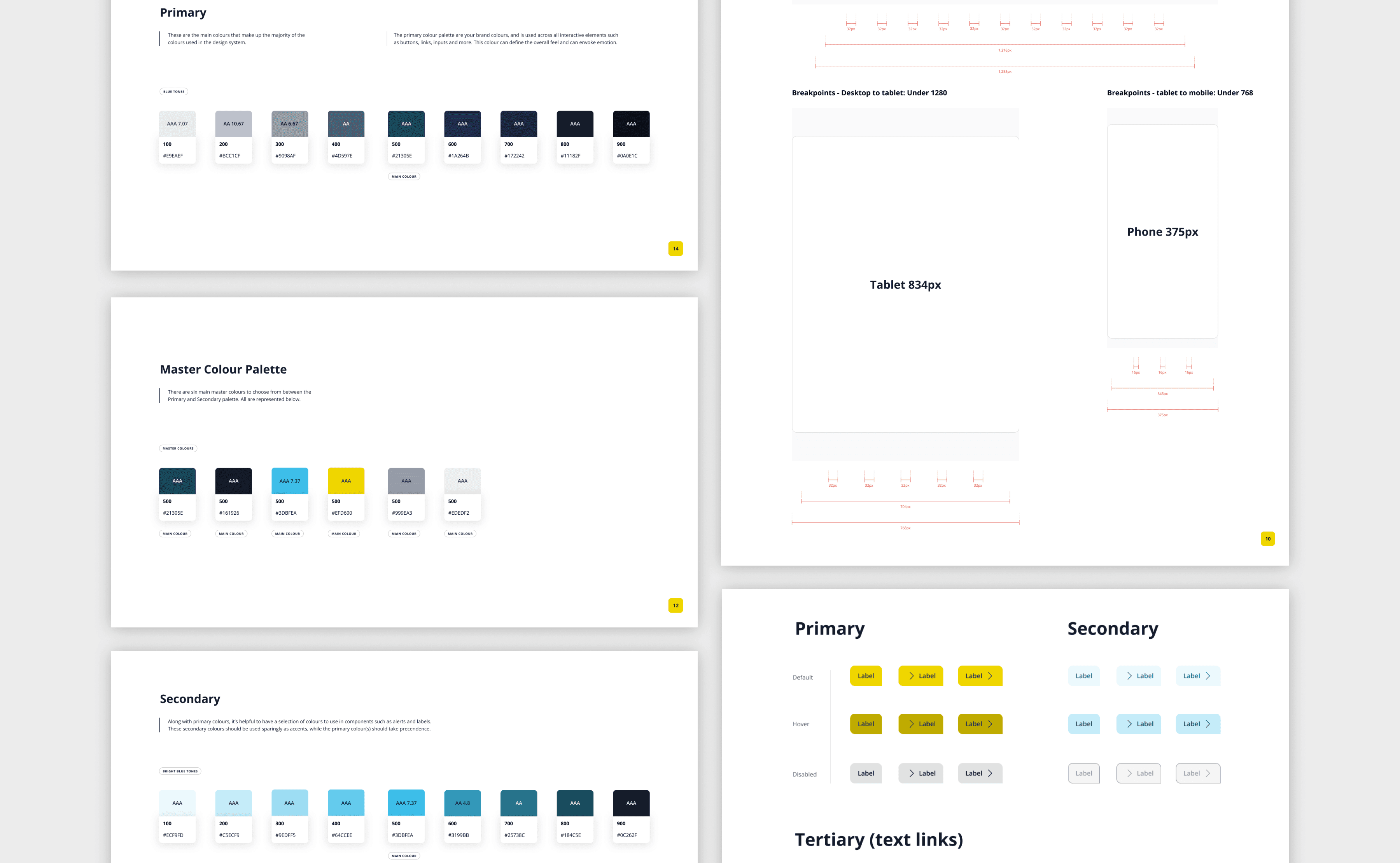
A governed component library with accessibility-rated colour tokens, interaction states, and scalable iconography. Markets assembled within rules rather than building independently.
04. The Solution
With architecture and governance in place, I redesigned the mobile experience around three engagement pillars: structured task progression, product education, and reward-based participation.
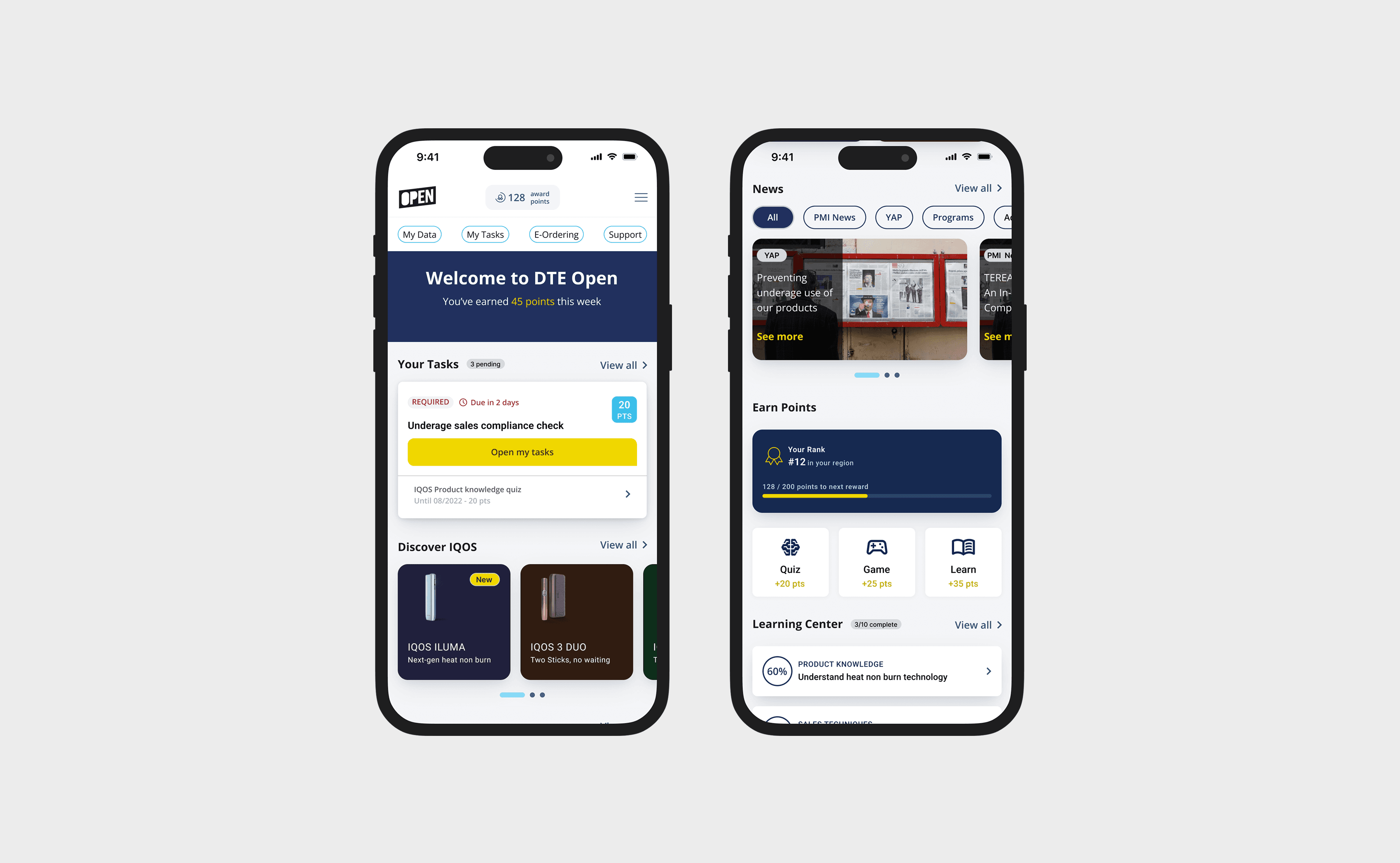
One surface connecting tasks, products, learning, and rewards. Replacing the disconnected experience that had driven half of retailers away.
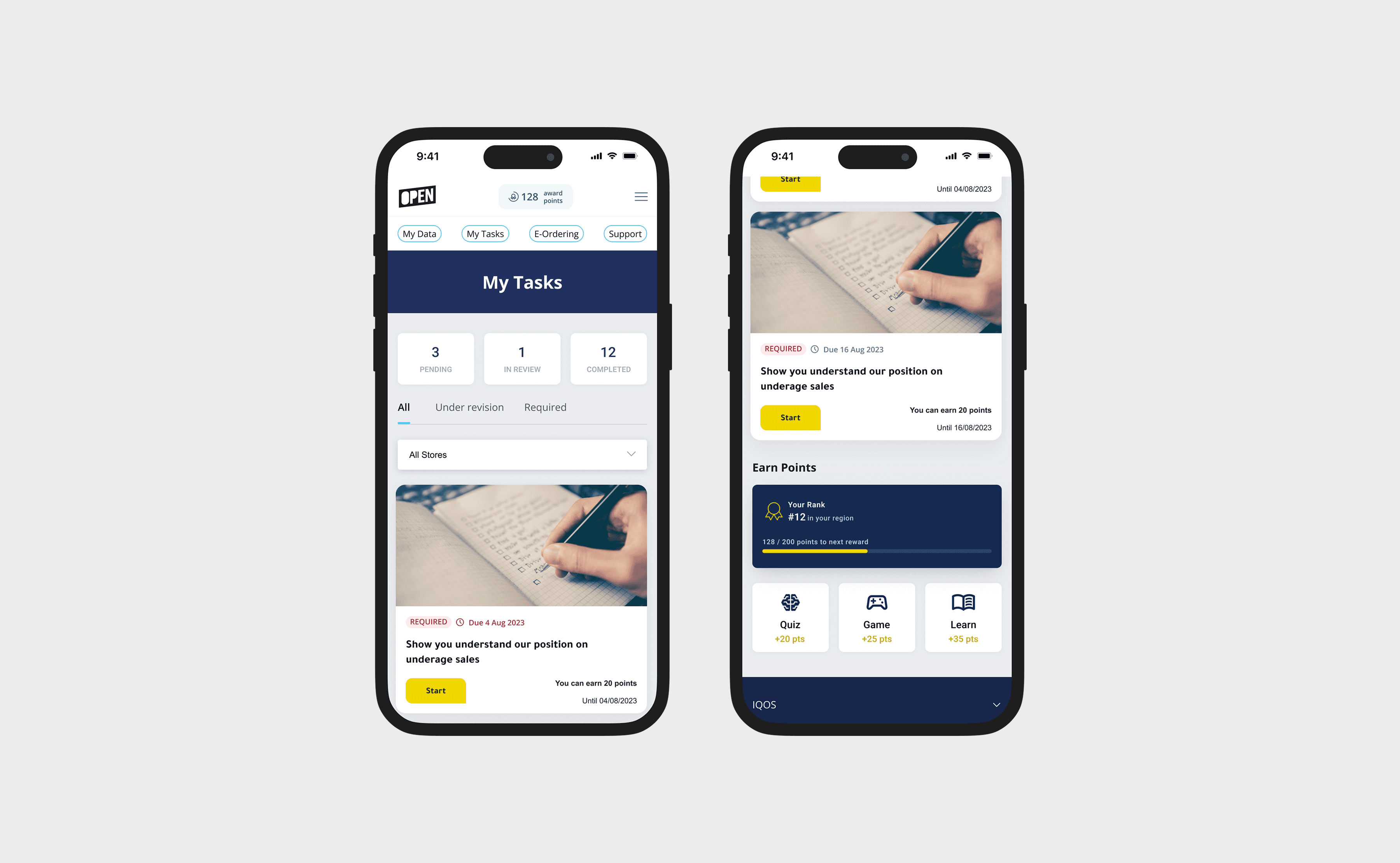
Structured task progression replaced an undifferentiated list. Retailers see what's required, what's earned, and what's next.
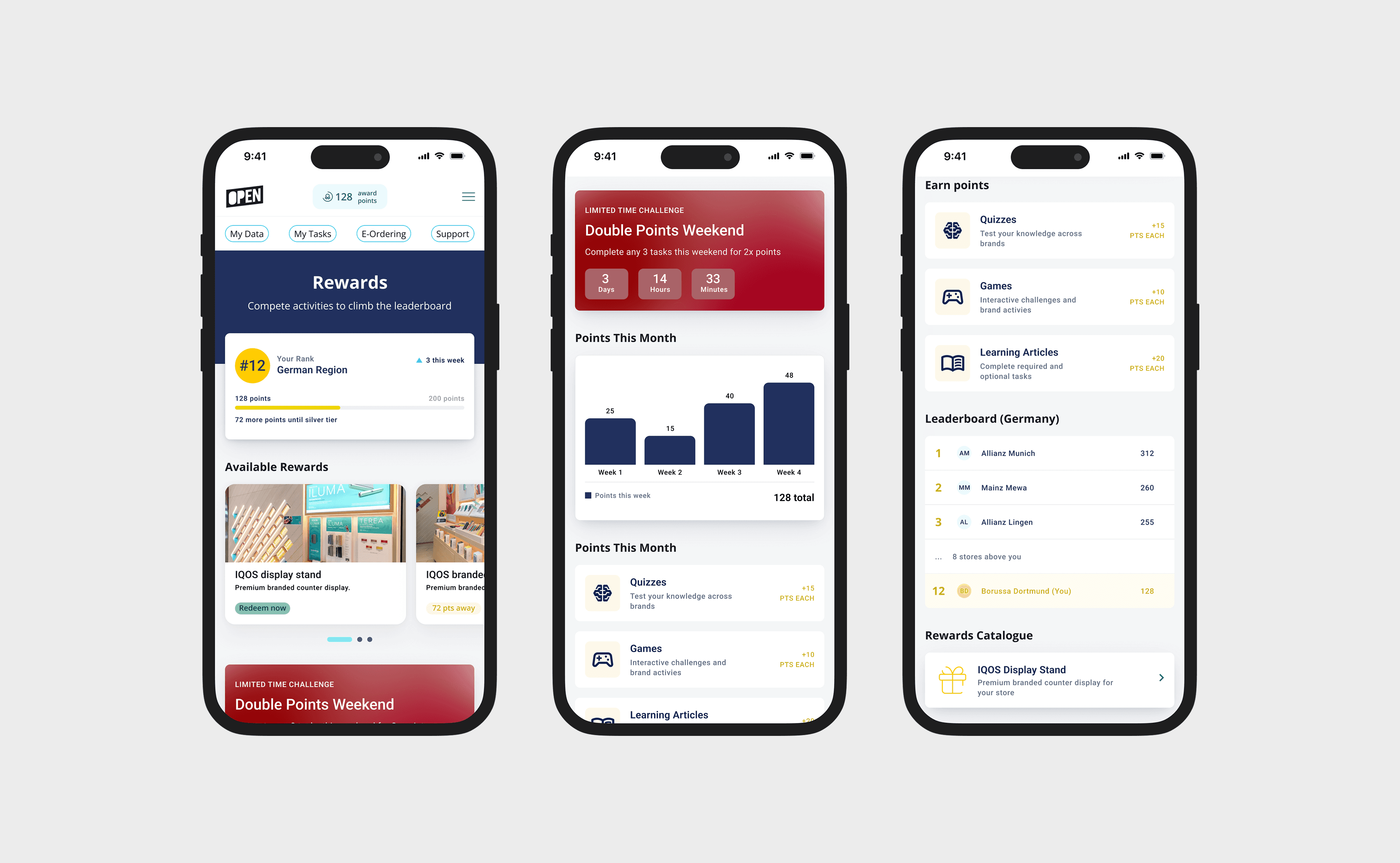
Gamification designed around sustained participation, not novelty. Leaderboards, challenges, and visible progression give retailers a reason to come back.
05. Results
3 Months after launch we saw:
7.9% — Increase in task initiation
12.6% — Increase in task submission
18% — Increase in page depth
32% — Increase in time spent on platform
Campaign rollout became consistent across markets for the first time. Custom CSS dependency was eliminated. The platform moved from adaptation-by-market to structured scalability.